EazLink guide
How do multi-store POS systems handle Ethiopia e-invoicing?
Run multi-store POS e-invoicing Ethiopia with branch identity, central monitoring, offline queues, rollout waves, and support ownership.
Short answer
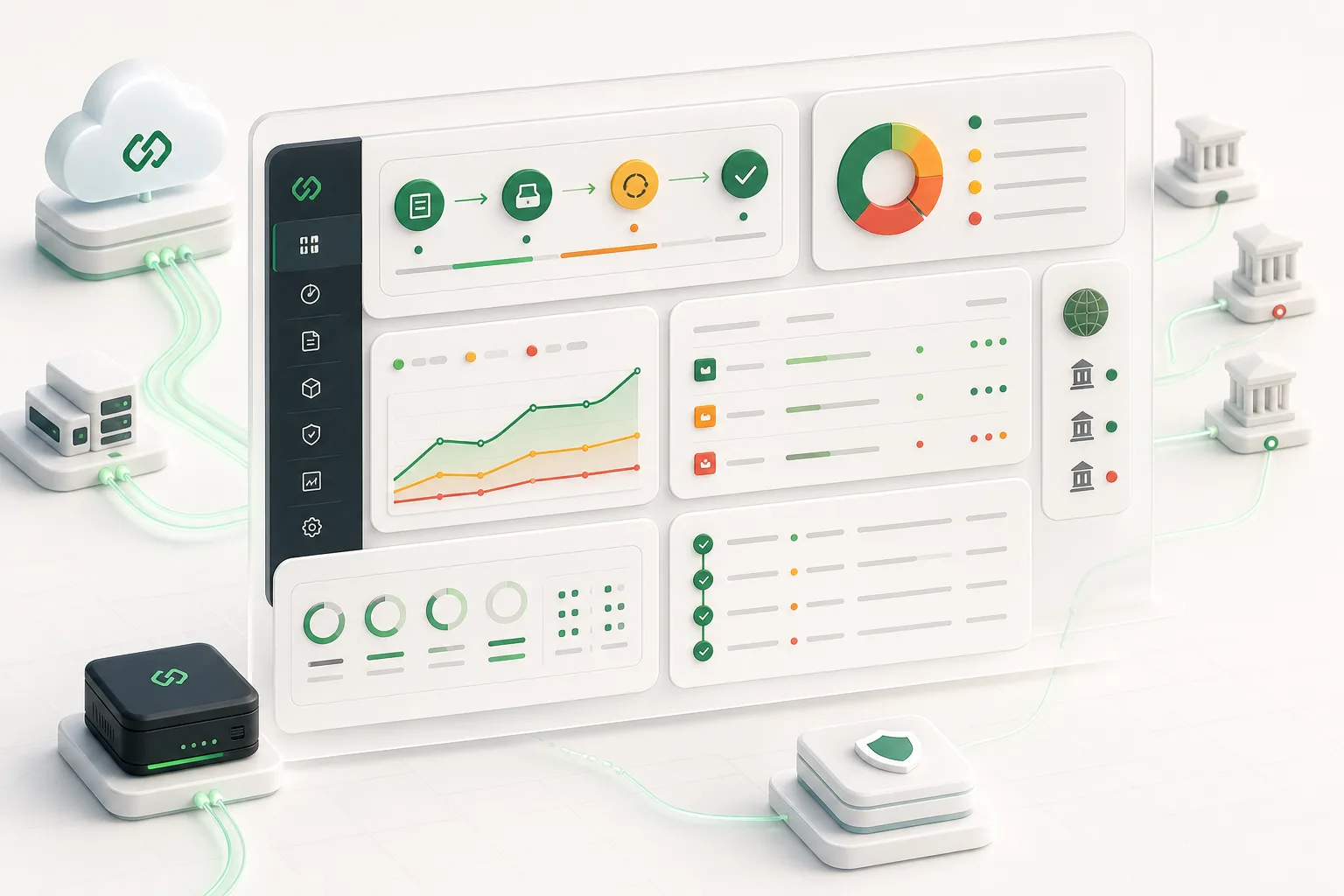
A multi-store rollout needs one operating model and clear branch-level control. Each store should have a known identity, configuration, queue, last synchronization time, software version, and support owner, while finance sees one consolidated view of invoice status.
Evidence checked: [1] Electronic Invoice Management System announcement · [2] Registered directives
Prepared and reviewed by the EazLink compliance engineering team at Xiamen DataMega Technology Co., Ltd.
Quick decision guide
| Best for | Retail chains, supermarkets, pharmacies, fuel stations, telecom dealers, IT operations, and POS partners |
|---|---|
| Main question | How do multi-store POS systems handle Ethiopia e-invoicing? |
| Before implementation | Confirm the current taxpayer scope, rollout notice, and technical specification with the relevant Ethiopian authority. |
What to remember
- Give every branch a clear identity and owner.
- Roll out in waves with measurable exit criteria.
- Monitor queues and versions centrally.
Treat configuration as branch data
Branch code, taxpayer identity, device assignment, receipt settings, connectivity profile, and support contact should be controlled data. A spreadsheet copied between technicians becomes difficult to audit after the first rollout wave.
Watch the stores that are quiet
A branch with no rejected invoices may still be offline or not submitting. Monitor last successful activity, queue age, transaction count, device health, and software version together.
Use rollout waves
Start with stores that represent the real estate: a busy Addis Ababa counter, a weak-network branch, a different POS version, and a location with local support constraints. Expand after the recovery and finance checks pass.
Branch rollout controls
- Create the branch and device register.
- Select representative pilot stores.
- Set queue, synchronization, and version alerts.
- Test local and central support handoff.
- Reconcile each wave before expansion.
Quick questions
What should head office monitor?
Monitor branch activity, accepted and rejected invoices, pending queue age, last synchronization, device health, software version, and unresolved support cases.
Should every branch go live at once?
A phased rollout is usually easier to control because the team can fix mapping and recovery issues before they reach the full estate.
Sources
- Electronic Invoice Management System announcement · INSA
- Registered directives · Ethiopian Ministry of Justice
Sources are used for regulatory and technical context only.
Related answers
Which Ethiopia industries need a tailored e-invoicing integration?
This page supports project planning. It is not legal, tax, or official EIMS authorization advice. Confirm current requirements with the relevant Ethiopian authority before implementation.